
Navigator replacing Horizon Feed on Quest headsets
Horizon Feed currently greets Quest users upon boot-up, though most would probably rather it not. Soon users will instead be greeted with their app library via the new Navigator UI.

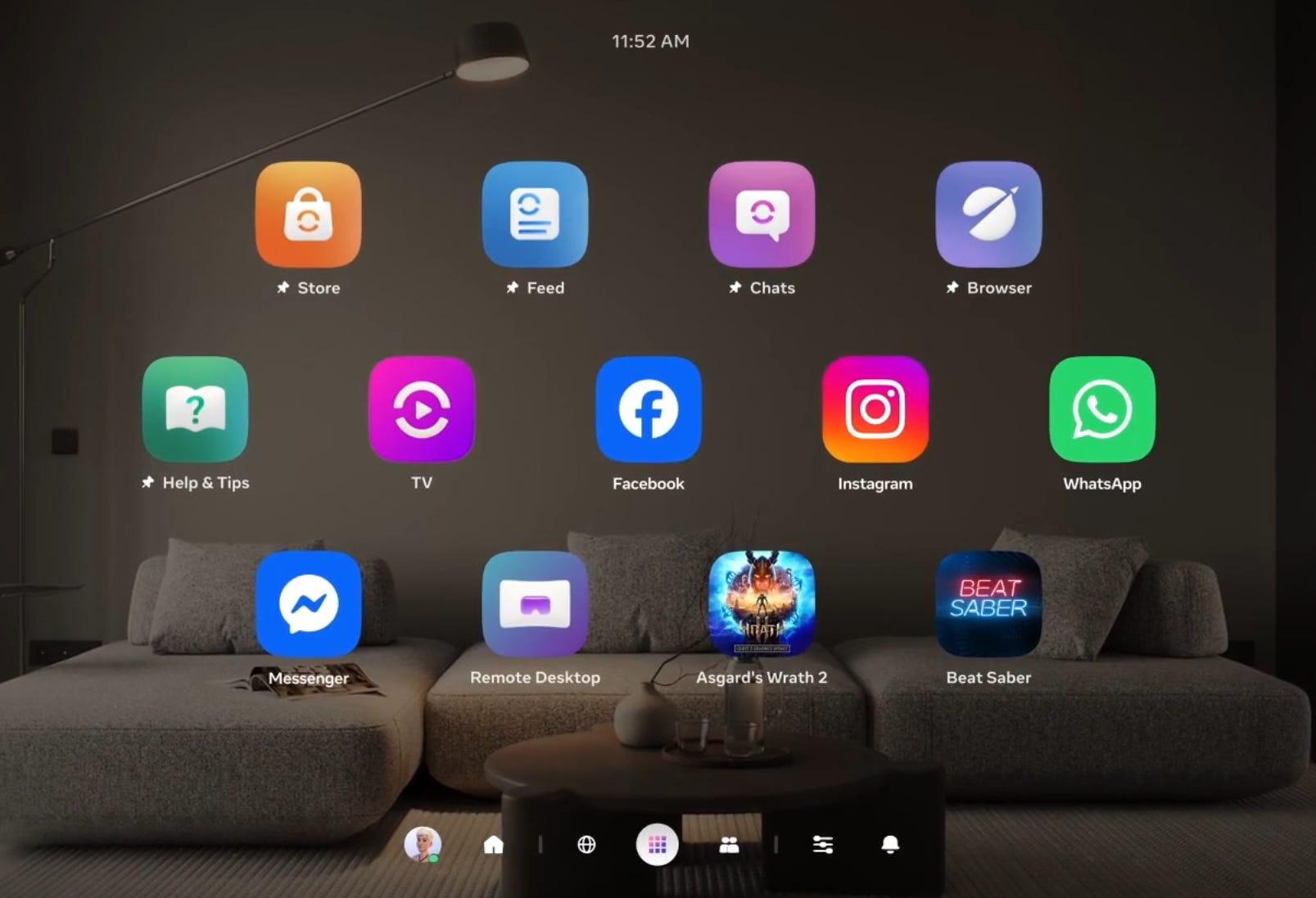
For the Quest 3’s life cycle, most users have likely gone through the same routine each time they donned their headsets: boot up, stare at the Meta logo, load into passthrough or a virtual environment, and immediately close the Horizon Feed that Meta forces into users’ vision.
According to a new Meta community forum post by Communtiy Manager h.taylor, Meta is now sunsetting this point of friction between users and their app libraries.
“We’ve been testing Navigator and will ramp up the rollout later this year, starting in v85. As Navigator rolls out, we’ll also begin gradually sunsetting the Horizon Feed in VR,” wrote h.taylor.
Public test channel users have already been on v85 since January 7, though this PTC release notably removed Navigator altogether. It had been disabled by default in a previous update, but users could still enable it under Experimental settings. Currently, it’s missing for all PTC users, but it seems that should change as v85 begins its stable rollout.
Horizon Feed currently opens to a landscape overview of various Horizon Worlds, events, friends, recently used apps, and app recommendations. The idea was likely to showcase a variety of content users could hop into, but most people probably don’t boot up their headsets with the intent of consuming whatever content Meta happens to present them.
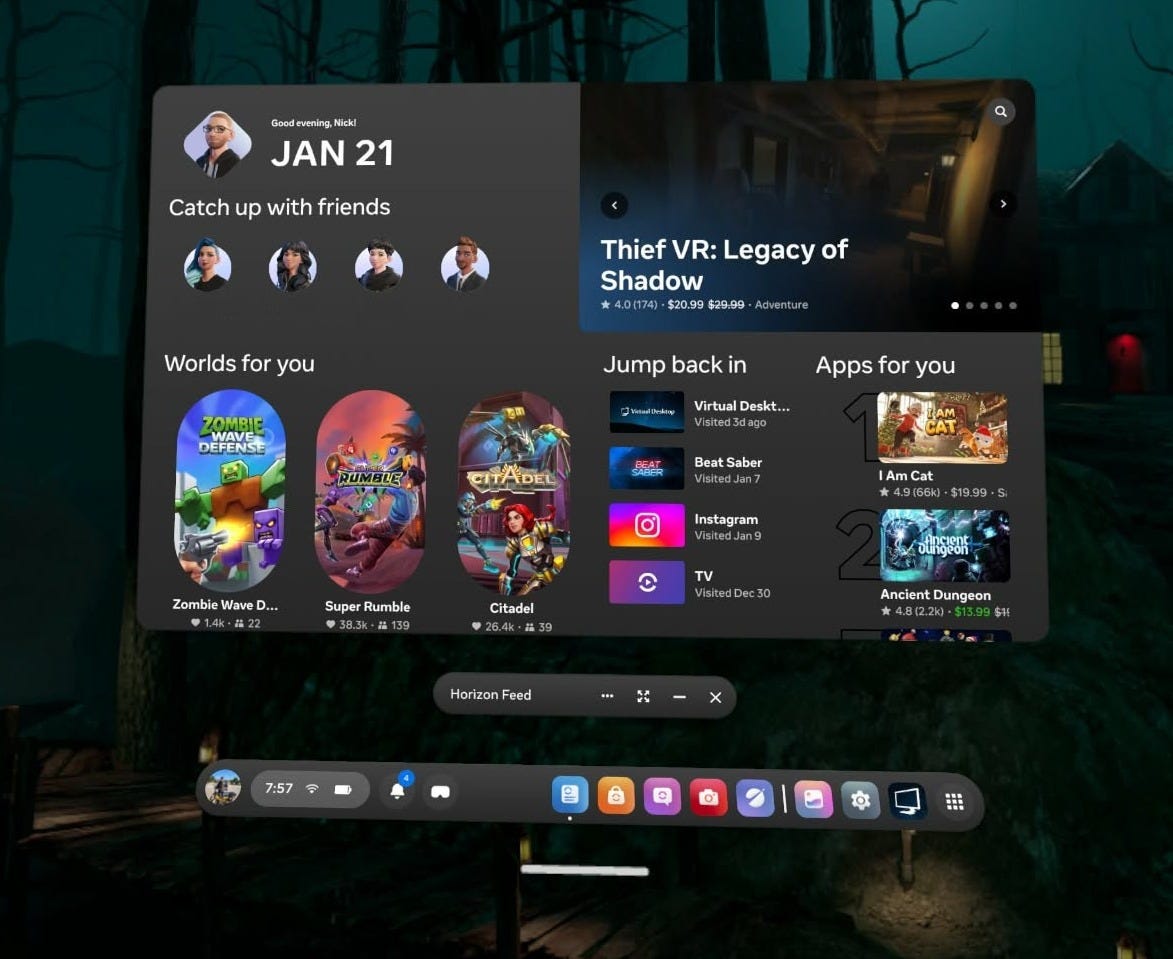
“The Horizon Feed in VR is not a high-intent surface, and users often see it without a specific intent to browse or purchase apps,” wrote h.taylor. “Because of that, it historically has not driven strong entitlement conversion, and we don’t expect significant revenue impact for the vast majority of developers.”
In other words, Horizon Feed was hardly ever converting users into paying customers anyway, so the impact on revenue for developers should be negligible.
With the Navigator rollout, users will instead be greeted with their App Library, reducing friction for users booting up their headsets with a clear intent of what they want to experience or who simply want to browse their own library of apps and games.
The Navigator brings Horizon OS more in line with Vision OS and Android XR, both of which boot you into a more traditional app screen. it’s similar in concept to a mobile home screen, though designed to make use of the greater screen real estate afforded by an approximately 110-degree XR field of view.
The community forum post touts future Navigator-specific creative assets for developers to create the appearance of app icon spatialization. Utilizing background and foreground layers, app icons can appear to pop into the foreground, creating a three-dimensional effect.
The post does not provide a specific timeline for Navigator’s rollout, other than referring back to Connect 2025, where Meta announced it would be rolling out Navigator in 2026.
In October 2025, Meta announced a restructuring at Reality Labs that saw Horizon OS broken off from Metaverse into its own top-level group. Given the rollout of Navigator and the anticipated first-half 2027 release of Project Phoenix, it would seem Meta is preparing for a more general spatial computing MR ecosystem, not unlike what users can experience today on Apple Vision Pro and Samsung Galaxy XR.
Reality Labs’ apparent spatial computing vision for v85 and beyond is a topic I’ll be exploring in a future blog post. Be sure to subscribe to be notified as soon as it’s live.